
What is Supported Living?
You’ve heard about Supported Living, but you’ve not experienced it and don’t know whether it’s the right thing for you or the person you care about. You know that social care has its challenges as well as triumphs, and the jargon and buzzwords do more to confuse than reassure you.
We get it.
Anyone considering Supported Living is making a life changing decision, and you want to feel confident before you take the leap. No one makes this decision based on a leaflet (or blog post!) alone, but we want to help you on this first and every step of your journey when it comes to making the right choice for you.
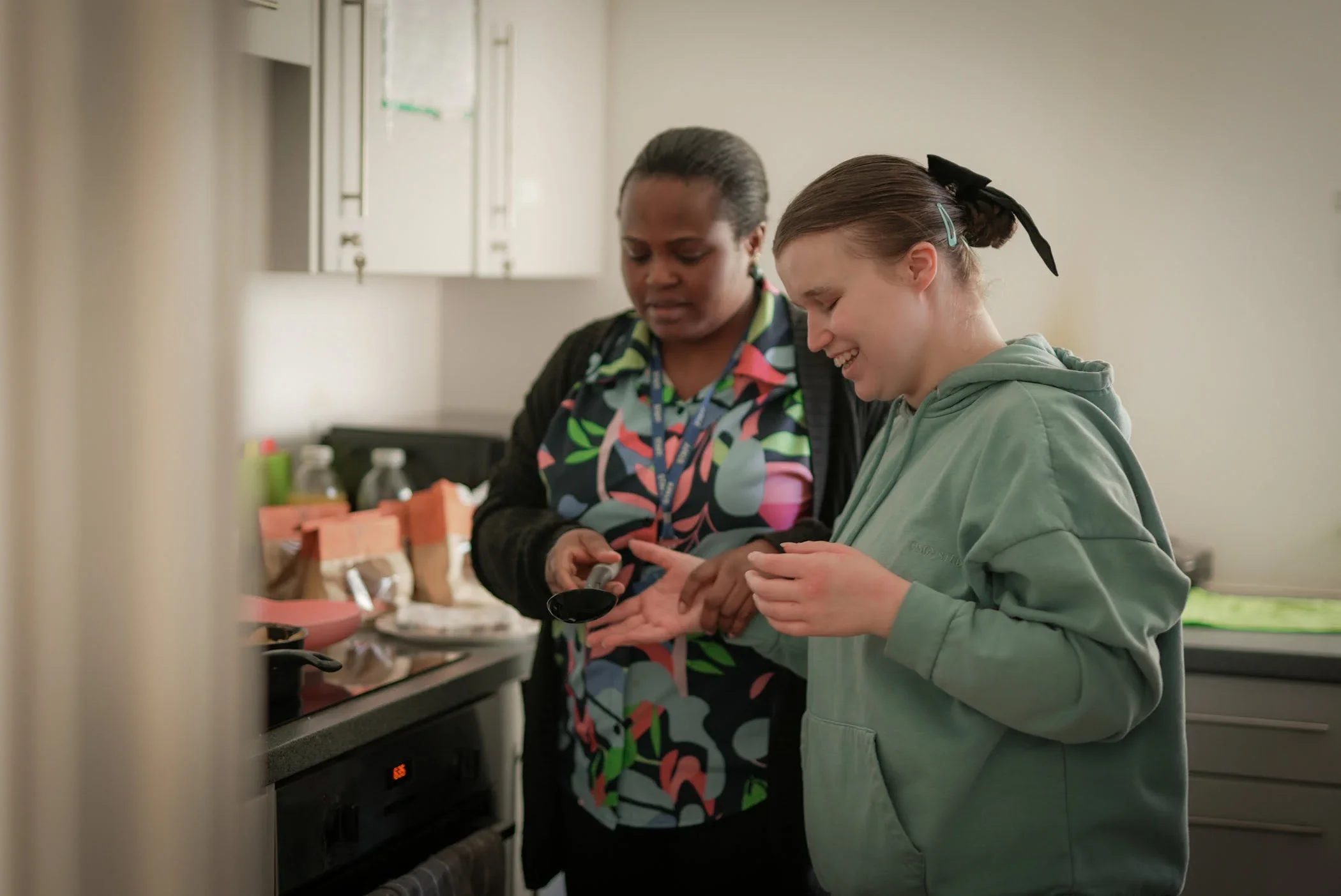
A visually-impaired woman is supported in the kitchen.
So, what is Supported Living?
Simply put, Supported Living is a great option for people who want to live with greater independence, but need support to do so safely and successfully.
Supported Living allows individuals to own or rent their accommodation and receive the support they need – and want – to live life to the full.
It’s a little different to other care options, like:
Residential care – where individuals live in a care home and don’t hold their own tenancy. This means less choice about things like their home environment and the people they live with.
Home (domiciliary) care – which can offer similar levels of independence to Supported Living, but is often something people move on from when they want to leave the family home and live more independently as adults.
In Supported Living, individuals are responsible for their own home. They choose the support they receive to help them live a fulfilling, empowering and independent life.
Supported Living is all about independence — but we recognise that independence looks different for everybody.
At Abacus Care & Support, we see independence as a journey. We all need a bit of help along the way. Supported Living with Abacus ensures people get the right help, in a home that’s right for them.

A man watches TV with his Support Worker.
Who is Supported Living for?
Supported Living services can be appropriate for individuals with a wide range of support needs, including:
Learning disabilities
Physical disabilities
Autism
Mental health conditions
Behaviours that may be described as challenging
Different providers may specialise in supporting people with particular diagnoses or levels of need.
At Abacus, our experience lies in supporting adults with complex needs – including those with complicated histories of finding the right support. We understand that one size never fits all.
Our support ranges from individuals who benefit from just an hour or two of support each week, through to those who require 24-hour support with higher staffing ratios. What matters most is that support is tailored to the individual.
Typically, people are referred to Supported Living through their local authority (council), which is responsible for ensuring they receive appropriate care and support. In most cases, individuals who would benefit from Supported Living are entitled to funding that enables them to access it.

A learning-disabled man dances with his Support Worker.
What does Supported Living look like at Abacus?
At Abacus, the people we support are the heartbeat of our service.
In everything we do, we aim to meet people where they are and help them move towards where they want to be. Practically, this looks like taking the time to understand each person’s unique needs, wants, preferences and goals, and developing a care and support plan that enables them to grow and flourish day by day.
Beyond maintaining a tenancy and looking after their home, what a day, week or year looks like in Supported Living is entirely personal.
For some people, that might mean building daily living skills such as cooking, budgeting or using public transport. For others, it may involve accessing education, volunteering, employment opportunities or developing social connections. And it always factors in the activities and experiences that give people joy and satisfaction.
Our role is to understand what matters to each person and support them to build the life they want – not to dictate it. Independence and choice are central to what we do.
Whether it feels achievable at the beginning or not, increasing independence - in line with individual goals - is always part of our approach. We’ve celebrated many milestones over the years - from the first independently made cup of tea, to finding meaningful work, reducing support needs, and even moving on to live alone.
Time and again, the people we support let us know how proud they feel about the independence they’ve gained. Those moments are some of our favourites.
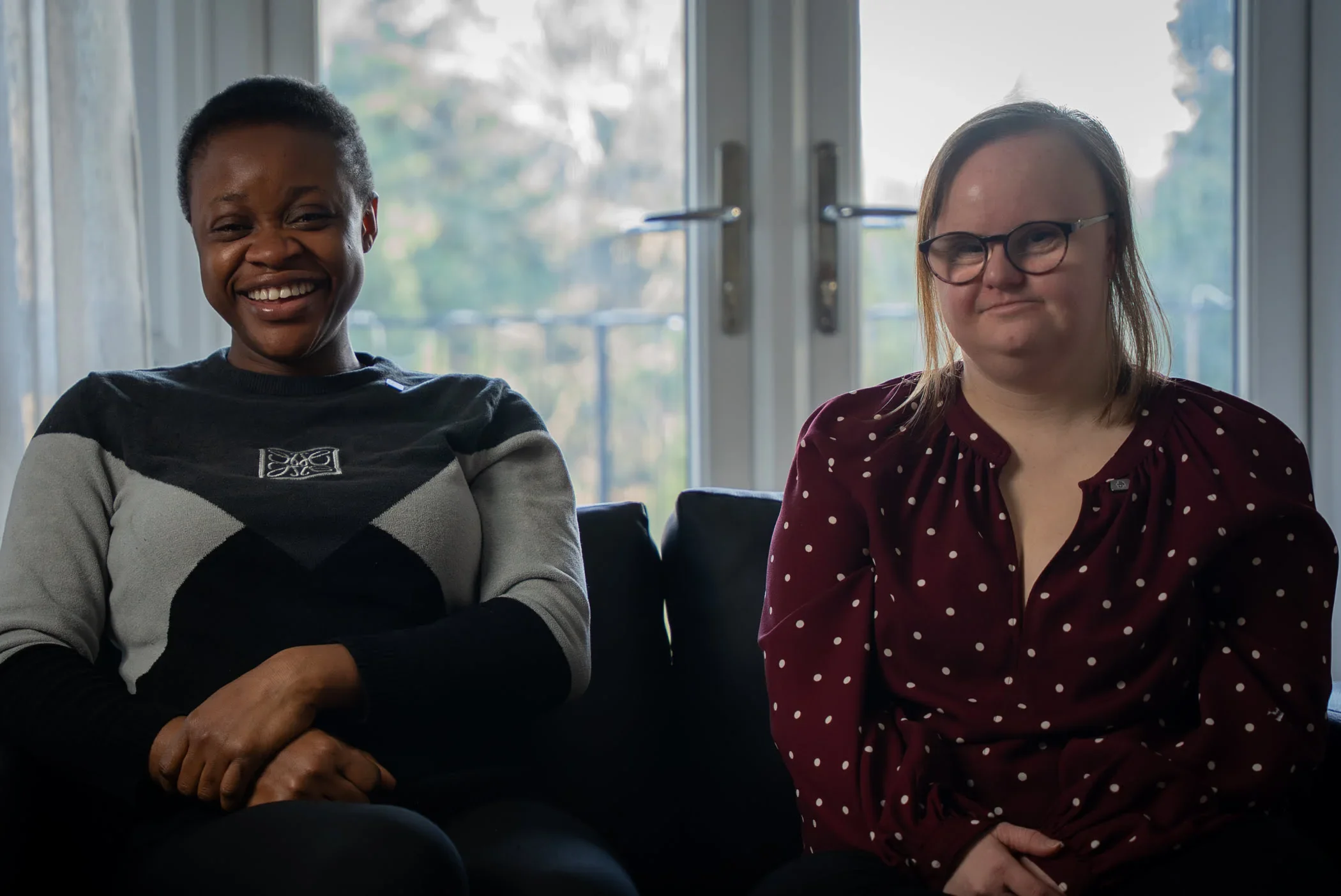
A woman wth Down Syndrome sits with her Support Worker.
Is Supported Living right for me or my loved one?
If this article reflects your current situation, there’s a good chance Supported Living could be worth exploring further.
It’s important to ask questions, consider your options and take time to find the provider that feels right for you. Choosing support is deeply personal.
We hope the photos, videos and stories on our website help bring to life what Supported Living at Abacus looks like in practice.
Our team would be delighted to talk to you about current availability. We also work with local authorities to source suitable properties and develop new services in areas where we don’t currently operate - because our goal is to meet people where they are, not fit them into a system.
If you’d like to start a conversation, please get in touch. We’re here to help you decide whether Supported Living could be the next positive step for you or your loved one.